
KiloWatt Hours

Driving Electric in San Diego




 Log in
Log in
Log in

Some of the confusion around driving electric comes from not understanding the unit of measure used for electric "fuel". Even those who have heard of a kilowatt-hour aren't sure what it is. We can touch a gallon jug and have an intuitive feel about it as a unit of measure. On the other hand, we never want to touch a kilowatt if we want to live to tell about it. In case you're curious, a gallon of gas translates into about 36.6 kWh in energy value.
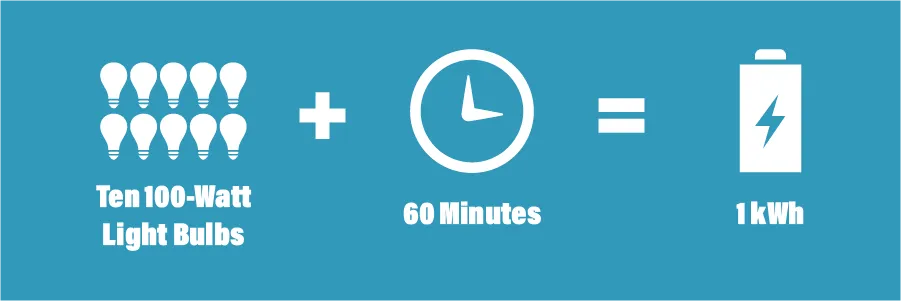
A kWh is actually a very precise unit to measure energy. A practical definition is the amount of energy needed to power ten 100-watt bulbs for one hour. Next time visualize ten bulbs burning bright when you hear kilowatt-hour.
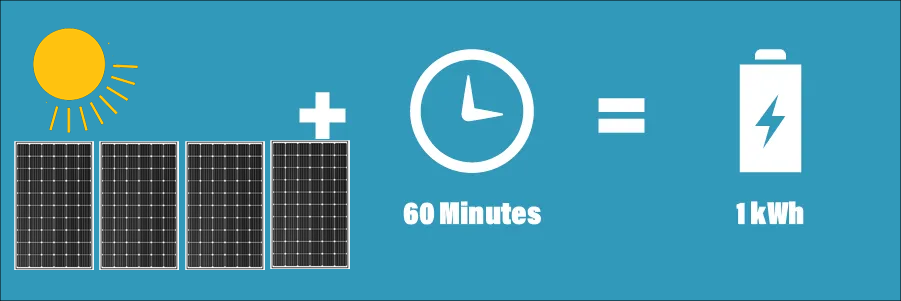
Another thing you might like to know is that a typical solar panel in full sun generates about 250 watts. This means that four panels would generate a kilowatt-hour of electricity in one hour.
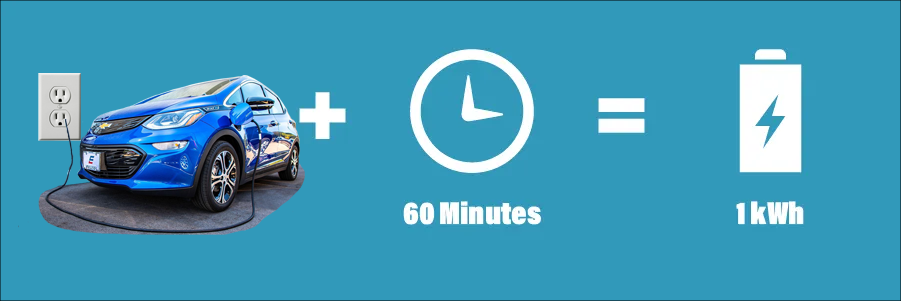
Yet another consideration is that the amount of energy transferred to a car charging from a typical wall outlet is about a kilowatt. So, Level One charging means your battery gains a kWh for every hour it is plugged in.
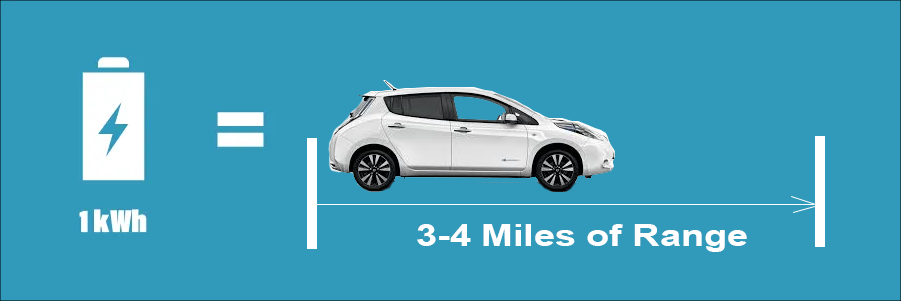
What all that boils down to for EV drivers is that a typical EV can go about 3 to 4 miles on one kWh of energy. Of course, your mileage may vary.
Explaining the cost of a kWh is like explaining the cost for a cup of coffee. To some, coffee is just coffee no matter how it is made. Others understand the nuances from instant to Kopi Luwak. In any case, the difference in cost can be hard to explain (or sometimes even justify).

The cost of a kWh is the product of two primary factors - production and delivery. Production cost is further impacted by supply and demand. The actual cost is further impacted by adjustments to penalize consumption and reward conservation. Recently rates have become based upon time of use. SDG&E's electric rates have traditionally been the second most expensive of anywhere in the country. The only more expensive place is Honolulu. SDG&E is number one for high usage customers. The actual values for 2019 can be seen here.

Installing solar is probably the best way to reduce electricity cost if you live in a single family home. If you are dependent upon SDG&E, there are special tariffs for people with an EV. By charging after midnight, rates can be as low as 9¢ per kWh. For the details see EV-TOU-2 and EV-TOU-5. Be sure to figure in air conditioning, pool pumps, etc. in determining the best rate tariff for your individual case.
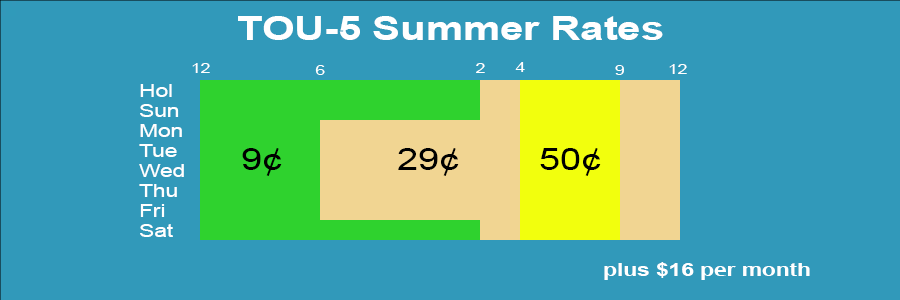
Some people have charging available at their workplace or apartment/condominium complex. Workplace charging may be free as employment perk. Complexes usually set their own rates. In any case, communal chargers are shared so there are usually time limits. You need to move your car after a fixed time or when your car is full - whichever is first.
Public charging cost ranges from free to local utility rates. Sometimes there is an additional charge for parking. Some people pirate free Level One charging if they find an open household outlet. Most public charging is Level Two (~30 miles of range per hour) with Level Three (~300 miles of range per hour) becoming more common. Tesla drivers have it easy since Tesla has been building out a network of Level Three chargers for the past eight years. Chargers for the general public have largely come to be because of government incentives/subsidies or merchants adding a perk to attract customers. An example of the latter is hotels/motels that offer complimentary Level Two charging for guests. Most public chargers have been installed by companies that run them as a business. They can be found on both public (e.g. airports) and private property (e.g. shopping centers) These usually cost about the same as the local utility.
One way to survey the cost of public charging is to use an app such as Plugshare to check what chargers are nearby (or any other location of interest). Click on a push-pin and see the particulars for that specific location If you do a lot of public charging, you may want to sign up with a charging company such as ChargePoint. Some cars come with some free charging credits on a particular network.
There is no simple rule-of-thumb for charging costs. It can vary from free to over 50¢ per kWh. Advance planning can usually keep the cost down. It's really not that different from pricing a cup of coffee.
Copyright 2025